
Special Session 4: Intelligent Sensing and Computing for Smart Elderly Care and Health Monitoring
The aging population creates an urgent need for
intelligent, unobtrusive, and human-centered healthcare technologies. This
special session focuses on emerging sensing and computing methods that can
support smart elderly care, including contactless vital sign monitoring, fall
detection, physiological signal analysis, and natural human-machine interaction.
Millimeter-wave radar offers privacy-preserving and continuous monitoring of
heart rate, respiration, and motion, making it well suited for elderly care
environments. At the same time, biomedical signal processing of EEG and ECG
enables deeper understanding of neurological and cardiac conditions, while
affective computing and multimodal large models provide opportunities for
empathetic and context-aware interaction. Furthermore, brain-inspired computing
such as spiking neural networks can improve energy-efficient real-time
processing on edge devices. Technologies from intelligent cockpit sensing,
including driver and occupant monitoring systems, can also be adapted for
in-home health monitoring and assisted living. This session aims to bring
together researchers from radar sensing, biomedical signal processing,
brain-inspired intelligence, human-computer interaction, and smart cockpit
perception to share novel algorithms, systems, and applications. We welcome
original research, case studies, and surveys that bridge these disciplines and
advance intelligent, non-intrusive, and user-friendly healthcare for aging
populations.
Related topics for this special session (but not limited to) :
1. Millimeter-wave radar and Wi-Fi based contactless physiological monitoring
and fall detection
2. Biomedical signal processing for ECG, EEG, and photoplethysmography
3. Biometric recognition and health-state classification for elderly care
4. Brain-inspired computing, spiking neural networks, and low-power edge AI for
wearable or ambient sensing
5. Affective computing and emotion recognition for human-centred elderly care
6. Multimodal large models and human-computer interaction in smart home health
systems
7. Driver and occupant monitoring systems adapted for in-home health monitoring
8. Multi-sensor fusion using radar, vision, wearable, and physiological signals
9. Real-world deployment, clinical validation, and privacy-preserving smart
elderly care
10. Sleep monitoring, stress assessment, and daily activity analysis for older
adults
We invite researchers and practitioners from academia and industry to submit
original research articles and comprehensive reviews that demonstrate
significant advances in Intelligent Sensing and Computing for Smart Elderly Care and Health Monitoring.
Submission Method
Electronic Submission System (.pdf)
(Please select and click Special Session 4: Intelligent Sensing and Computing for Smart Elderly Care and Health Monitoring to submit.)
Organizer
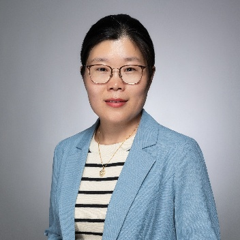 Dr
Aifei Liu is currently an Associate Professor at the School
of Al and Advanced Computing, Xi'an Jiaotong-Liverpool
University (XJTLU), Suzhou, China.
Dr
Aifei Liu is currently an Associate Professor at the School
of Al and Advanced Computing, Xi'an Jiaotong-Liverpool
University (XJTLU), Suzhou, China.
Dr Liu received her PhD in June 2012, from the School of
Electronic Engineering, Xi’dian University, China. From Feb
2013 to June 2017, she worked as a Research Fellow at the
School of Electrical and Electronic Engineering, Nanyang
Technological University (NTU). From Aug 2017 to Dec 2021,
she worked as an Associate Professor at the College of
Underwater Acoustic Engineering, Harbin Engineering
University (HEU). From Jan 2021 to Feb 2025, she worked as
an Associate Professor in the School of Software at
Northwestern Polytechnical University (NPU).
Her research interests are the deep neural network (DNN)
theory and signal processing theory and their applications
on radar, sonar, and communications, and anomaly detection
in different events.
 Dr
Chunyu Tan is currently a Lecturer and Master’s Supervisor at the School of
Artificial Intelligence, Anhui University, China.
Dr
Chunyu Tan is currently a Lecturer and Master’s Supervisor at the School of
Artificial Intelligence, Anhui University, China.
Dr Tan received her PhD degree from the University of Macau in 2021. In
2019, she visited the University of Aveiro, Portugal. She also visited the
University of Macau in 2023 and 2025. She serves as a reviewer for several
academic journals, including TMI, MedIA, and JBHI, and was a Program
Committee Member for ICONIP 2023 and ICONIP 2024. She is also a member of
the Medical Research Ethics Committee of the First Affiliated Hospital of
the University of Science and Technology of China (Anhui Provincial
Hospital).
Her research interests include biomedical signal processing, biomedical
signal and image coding, and biometric recognition; brain-inspired
intelligence, particularly the optimization and applications of spiking
neural networks; and human-computer interaction.